
If Shrek has taught us anything, it's that onions have layers – and, well, so do swamps.
Far from the muddy, misunderstood landscapes of fairy tales, wetlands and forests are complex ecosystems; neighbourhoods filled with life, shelter and intricate relationships between species.
But across Sydney's Inner West - in a land not so far, far away - those relationships are being increasingly disrupted. As old trees disappear, so too do the natural hollows that countless native animals rely on for nesting, shelter and survival.
As with any good fairy tale however, a looming threat doesn't have to mean there has to be a bad ending.
Step beneath the canopy at Marrickville's Gumbramorra Swamp and the city begins to fade. The steady rumble of traffic gives way to the chatter of boisterous cockatoos, and sunlight filters through towering gum trees, casting shifting shadows across the winding boardwalk.
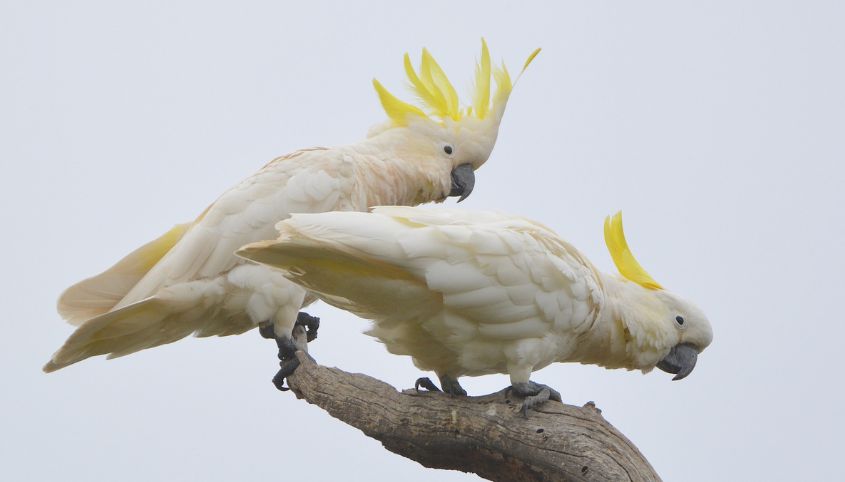 Sulphur-crested cockatoos on dead tree branch. Photo: Stephen Downes
To most visitors, it looks like any other pocket of urban bushland - But to Macquarie University PhD student and Smart Green Cities Research Centre researcher Selina Kosak, it symbolises something far different.
Working with Inner West Council, Kosak is meticulously designing, tailoring and installing a new generation of artificial hollows throughout the gum trees of the area.
Each hollow is engineered for the needs of a particular species, with the aim of restoring habitat for native wildlife including several parrot species such as the red-rumped parrot and several species of microbats recorded in the area.
It's a process that goes far beyond simply building a box and hanging it from a tree.
"Not every natural tree hollow suits every species, and in the same way, not every piece of artificial habitat suits every species," explains Kosak.
"Each piece of habitat has been designed to target a specific species that we know occurs in the area. What we're trying to do is design habitat that firstly targets species known to occur and then incorporates characteristics that are preferred or are required by those species.
"We've considered the species' natural behaviours and designed the habitat around those requirements."
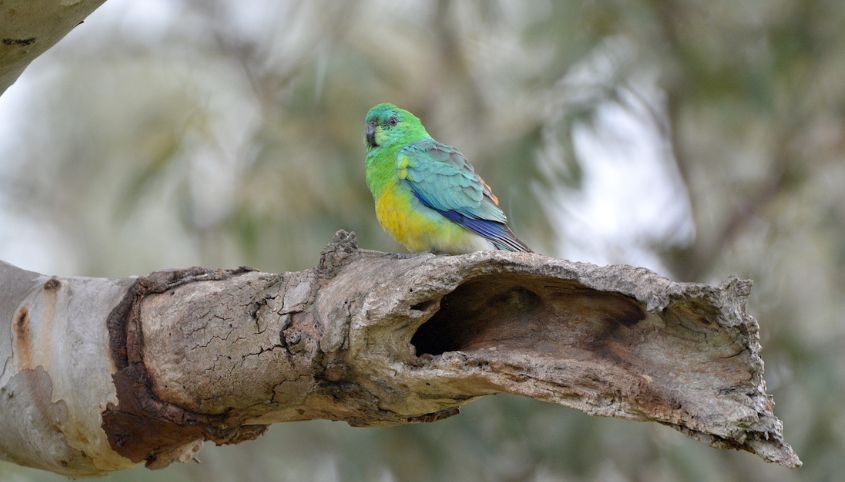
Male red-rumped parrot above dead branch hollow. Photo: Stephen Downes
Rather than creating a one-size-fits-all solution, Kosak tailors each structure to the habits, size and preferences of the animals she hopes to attract. The result is a collection of bespoke homes that mirror nature as closely as possible, giving wildlife the best chance of accepting an artificial substitute.
"The aim is that the big parrot box will primarily be used by red-rumped parrots, which have been recorded in the area," Kosak explains.
"Potentially, it could also be used by smaller species of parrots found in the area.
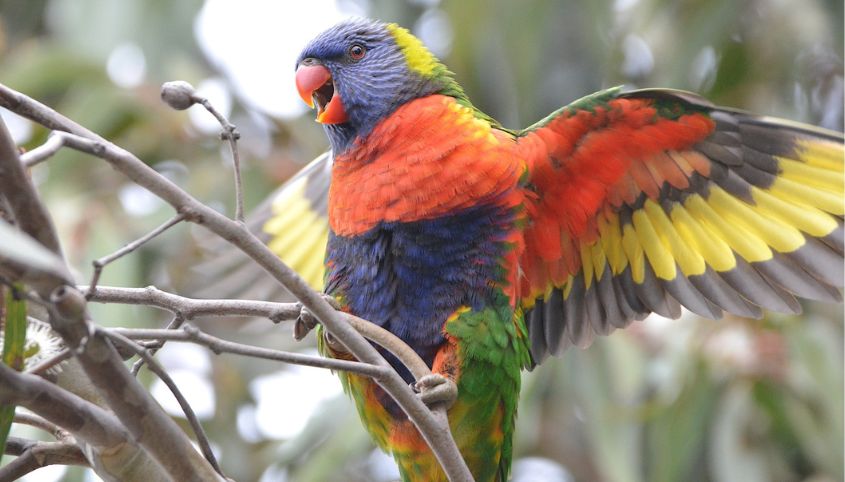
"Rainbow lorikeets are sometimes considered a pest when it comes to urban hollows and nest boxes because they are so good at adapting and finding homes, so we are trying to cater to the other species that seem to be less common.”
Kosak pauses beneath another towering eucalyptus and looks toward the sky. From the ground, the hollow is almost impossible to spot - a nod to its careful design, made for the eyes of wildlife, not those who pass by.
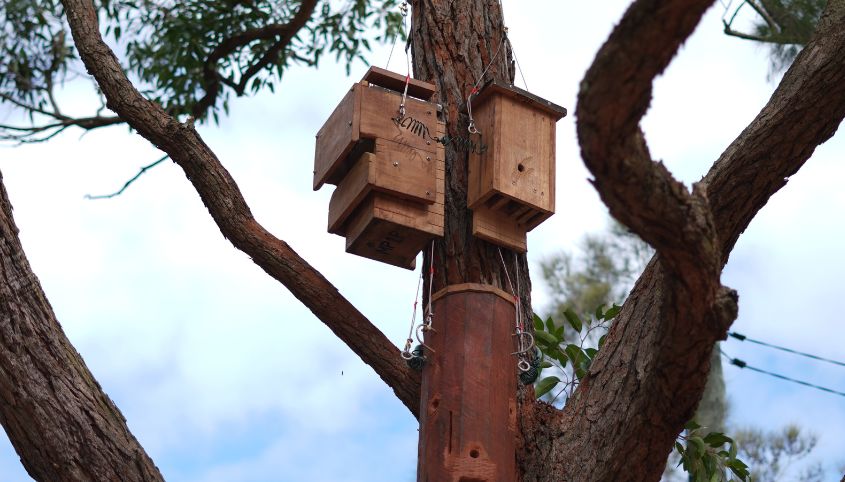
"The one straight to the right with the little hole on the front is a bat box. Our aim with that one is to encourage a greater diversity of microbat species to occupy the habitat.
"It has different sized entrances and internal chamber widths with the aim of appealing to more species."
But while the structures themselves may seem small, the conservation challenge they're addressing is far-reaching, with Kosak noting the scope of the problem that lies outside of this Inner West project.
"Australian cities support a huge diversity of species, and a lot of these are hollow-using species," says Kosak.
"But we're losing tree hollows rapidly through land clearing, tree removal, and even just tree pruning. If we don't sort out a solution for this soon, we're going to lose those hollow-using species within those areas as well.
"A lot of people don't realise how long natural tree hollows take to form in Australia.
"Unlike other parts of the world, we don't have species like woodpeckers that create hollows from scratch. Instead, we have to wait for trees to age over very long periods of time before hollows develop naturally."
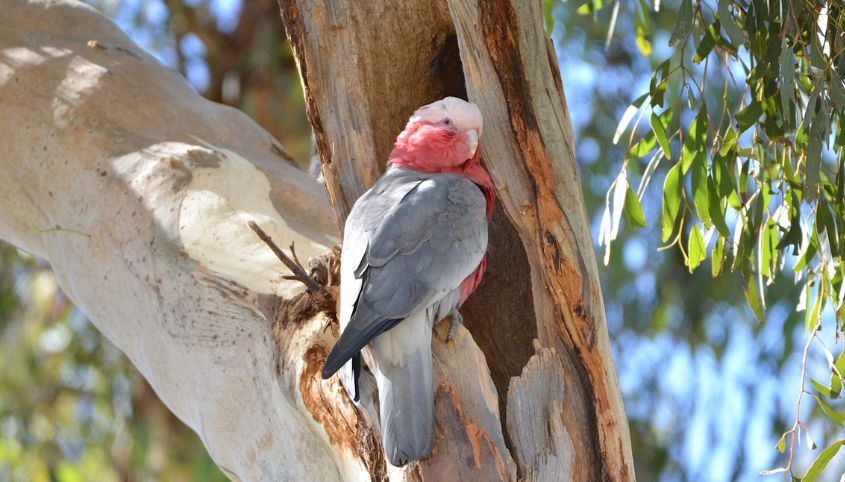
But for now, at least, as the afternoon light softens, Gumbramorra feels alive.
Rainbow lorikeets flash through the canopy, insects hum beneath the undergrowth, and a gentle breeze stirs the towering eucalyptus overhead.
To many people, an ageing tree is something to be pruned, removed or replaced before it becomes a hazard.
To Kosak, it's something else entirely: a home.
Looking ahead to the future, it's a perspective she hopes more people will embrace.
"We're very focused on increasing canopy cover in our urban areas, but where there's life, there's death, and we need to embrace those old, damaged trees as much as we embrace the new green canopies,” reflects Kosak.
"A dying branch is actually habitat for wildlife. Hollows form in tree trunks, but they also form in branches, and old, peeling bark is habitat too”.
"So let old trees be old trees. Enjoy the green canopy, but let's have a balance of everything. A healthy ecosystem is full of both life and death."
Want to visit? Gumbramorra Swamp is part of Mackey Park on Carrington Road, Marrickville, about 8km south-west of Sydney’s CBD. Visitors can explore the restored wetlands via the raised Reconciliation Walk boardwalk, which features viewing platforms and interpretive signage about the Aboriginal and environmental history.