
History is just gossip that was good enough to write down.
That is the ethos of Macquarie University Associate Professor Leigh Boucher and the genesis of his new ABC project, The Dead Can’t Sue.
The weekly Australian history podcast, co-hosted by Boucher and fellow historian Alecia Simmonds, will see the long-time friends and “serious academics” spill “all the dirty details” you won’t find in the history books.
The roster of historical figures up for discussion includes the likes of former Prime Minister Harold Holt, the Eora diplomat Bennelong, notorious criminals Chopper Read, William Buckley, and Tilly Devine, “1800s opera diva” Dame Nellie Melba, and colonial-era explorer Mathew Flinders (who wrote hundreds of love letters to his secret male companions).
“Our aim is to have a diversity of figures from different parts of Australia, different periods of time, and different backgrounds – but who also allow us to talk about dominant themes in Australian history,” Boucher says.
“For instance, we're talking about Chopper Read, but he allows us to have a conversation about why Australians have always been fixated with crime stories. As a nation, there is a kind of identification with the outlaws and the larrikins, and he really sat in that space."
Each episode will take a biographical approach to unpacking the life story of one historical figure, but the series will analyse what our enduring fascination (or lack thereof) with these figures says about us.
One of the most persistent themes Boucher has uncovered is that “Australians love a loser”.
“A lot of Australian stories are about loss. They’re about being defeated by landscape, defeated on battlefields, struggle, and victimhood,” he explains. “In one sense, the convicts were losers. They were turfed over the other side of the world.
“I think the notion of ‘the Aussie battler’ totally has its roots in these stories of victimhood, and often the people being described as battlers also have a lot of privilege. Highlighting loss and struggle is often a way not to talk about other more thorny questions, like dispossession.”
Harold Holt (1908 - 1967)
Harold Holt, the 17th Prime Minister of Australia who died by presumed accidental drowning in 1967, is a prime example.
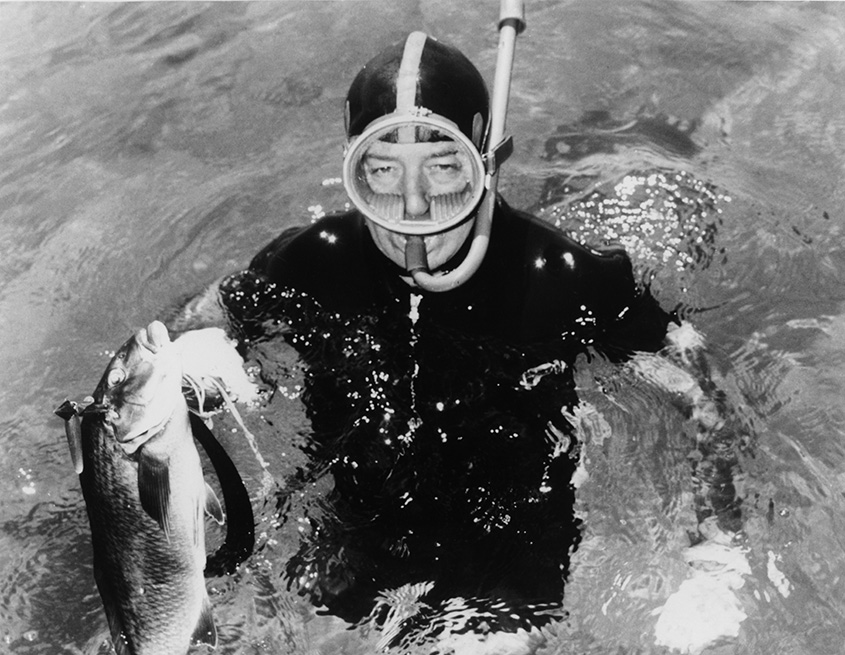 Australian Prime Minister Harold Holt skin diving at Portsea, Melbourne in 1966. Holt went missing the following year and was presumed drowned. Photo: Keystone Hulton Archive/Getty.
Born in 1908, Holt had a modest childhood as the son of schoolteachers but later became a successful lawyer and politician with properties in North Queensland, the Mornington Peninsula and Toorak.
“Harold went to private school and Melbourne University, but because he didn’t come from wealth, the story he told himself is that he never quite belonged,” Boucher says. Even when he was PM, he still considered himself a bit of an outsider.
Holt’s sudden disappearance sparked numerous conspiracy theories, which Boucher can finally put to bed. “Sorry, he just drowned,” he says. “Harold had a real cockiness about the ocean and a long history of doing dumb things in the water that came back to bite him, maybe literally. I suspect his foolhardy approach to dangerous waters was produced by a deep need to impress those around him.”
Dame Nellie Melba (1859 - 1931)
“I’m also equally interested in the people who have not captured the imagination of the Australian public,” Boucher says.
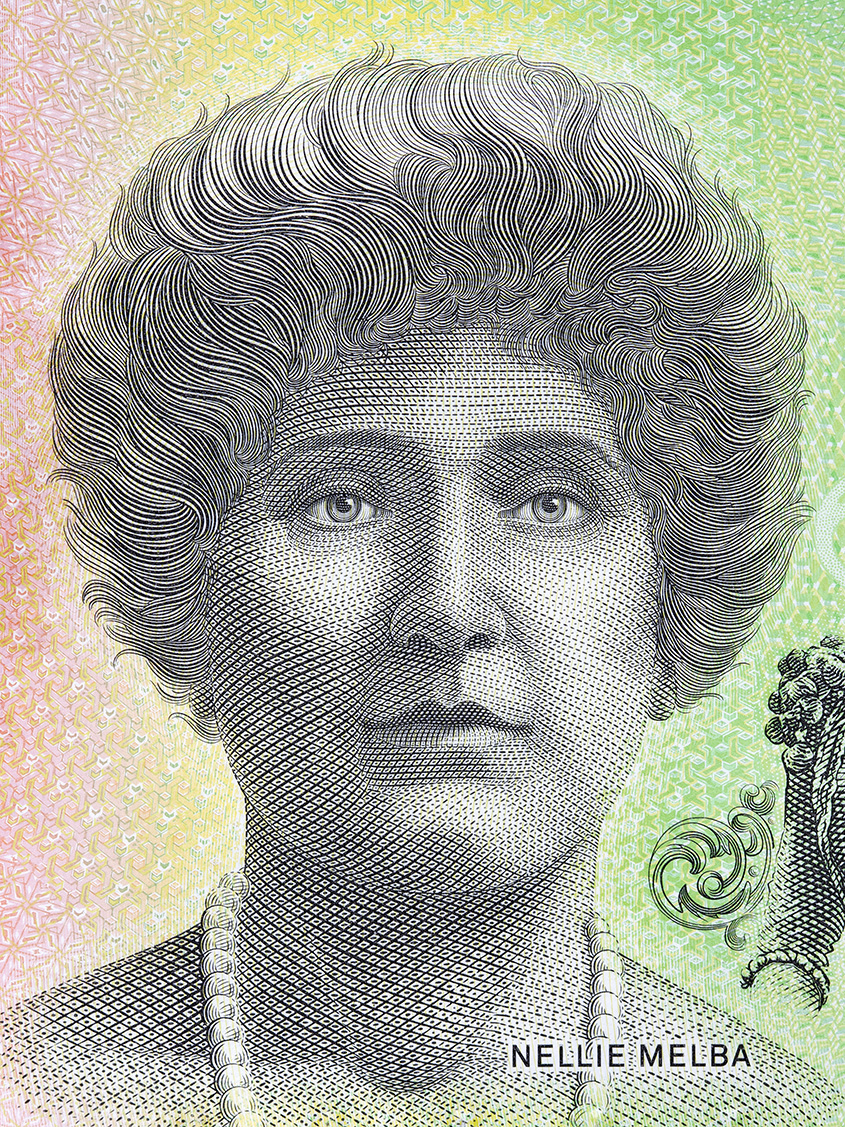 Dame Nellie Melba was added to the Australian $100 banknote in May 1996. Photo: Getty.
Dame Nellie Melba features on the $100 banknote but few people today would recognise her face. “But in the late 1800s, she was one of the most famous tabloid figures in the world.”
Melba, who took her stage name from her hometown Melbourne, was the first Australian classical musician to achieve international superstardom.
“There was definitely a pride that this colonial girl was making it in one of the most elite and rarified forms of European culture, but this was a double-edged sword,” Boucher says. “We can see a similar thing play out in the recent Kylie Minogue Netflix documentary. She’s put through a mincer in terms of press. That same thing happened to Nellie.”
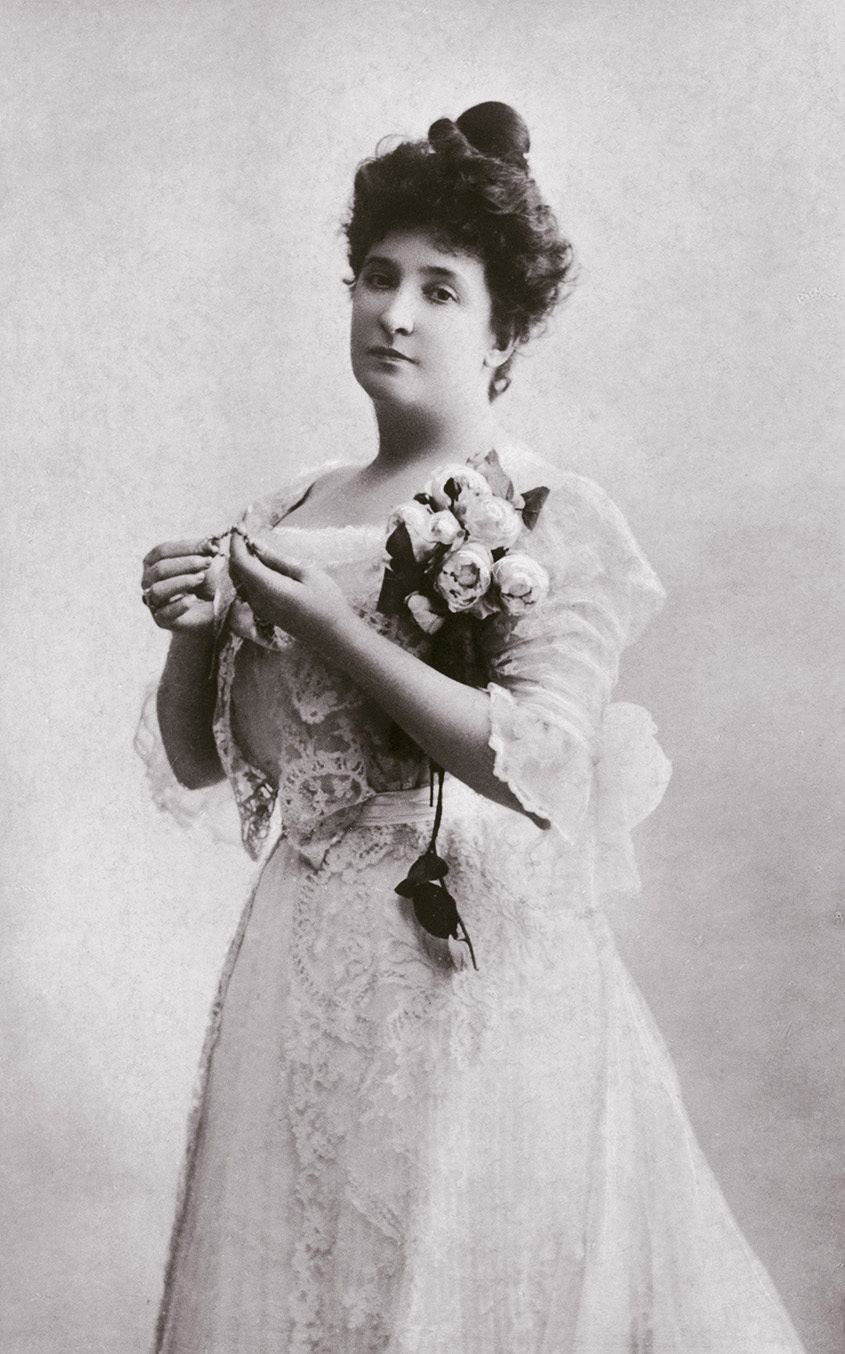 Australian Soprano Dame Nellie Melba, circa 1895. Photo: Paul Hulton Archive/Getty.
The UK tabloids feasted on Melba’s ‘diva’ antics and turbulent extramarital affair with Prince Philippe, the Duke of Orléans.
“I was really struck by how few historians talk about gender in relation to Nellie,” Boucher says. “She did some wild things. For instance, one of her rivals was singing a role she wanted on stage in London. So, she crept into the wings and sung the song along with her to show that she was better than the person on stage."
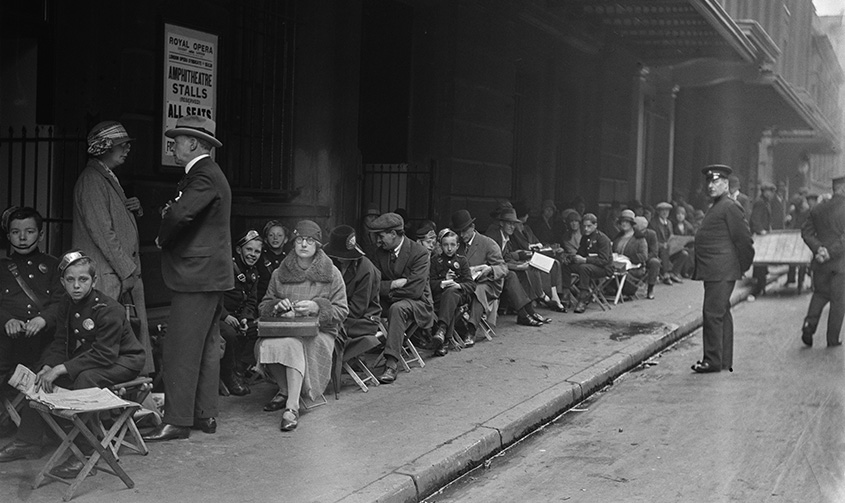 Circa 1926; A queue outside the Covent Garden Royal Opera House to see Dame Nellie Melba's performance. Photo: Hulton Archive/Getty.
“But I don’t think she was a bad person,” Boucher adds. He believes that years of press attacks labelling Melba as “a drunk, too competitive, and mean-spirited,” had broken her down. “What we’re looking at is an 1890 example of celebrity cancel culture.”
Matilda 'Tilly' Devine (1900 - 1970)
When Queen of Sydney’s underworld Tilly Devine died in 1970, the tabloid newspaper obituaries described the brothel madam as a “wretched woman” who “no one bothered” to mourn. Since her death, however, the “high priestess of savagery” has taken on a legendary stature in pop culture and fiction.
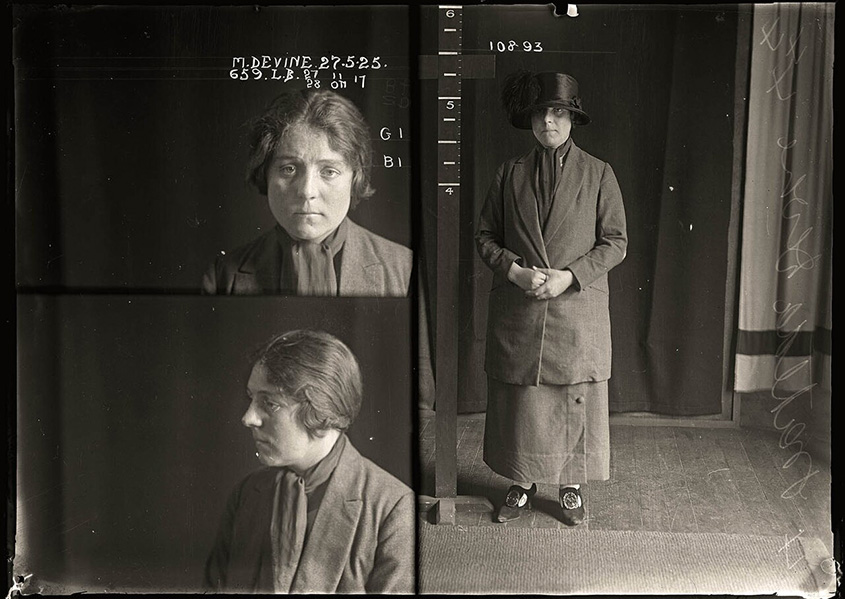 In 1925, Tilly was sentenced to two years in the State Reformatory at Long Bay for maliciously wounding Sydney Corke with a razor blade. He needed 17 stitches. Photo: Getty.
The New South Wales Police Offences (Amendment) Act of 1908 made it an offence for men to operate a brothel, act as a pimp, or profit from the earnings of prostitution. The loophole was this prohibition did not extend to women.
By the end of the 1920s, Tilly owned of a string of brothels throughout Surry Hills, Darlinghurst, Paddington and Woolloomooloo, and at one point, was even said to be the richest woman in Australia. To guard her empire, she employed a large staff of standover men to protect both her premises and the women working in them.
“I think somebody rebelling against the gender order for their own gains doesn’t necessarily make them a feminist, right? That’s the lesson of Tilly,” Boucher says. “Although, she really did look after her girls. If somebody hurt one of her sex workers, she would retaliate with razor blades.”
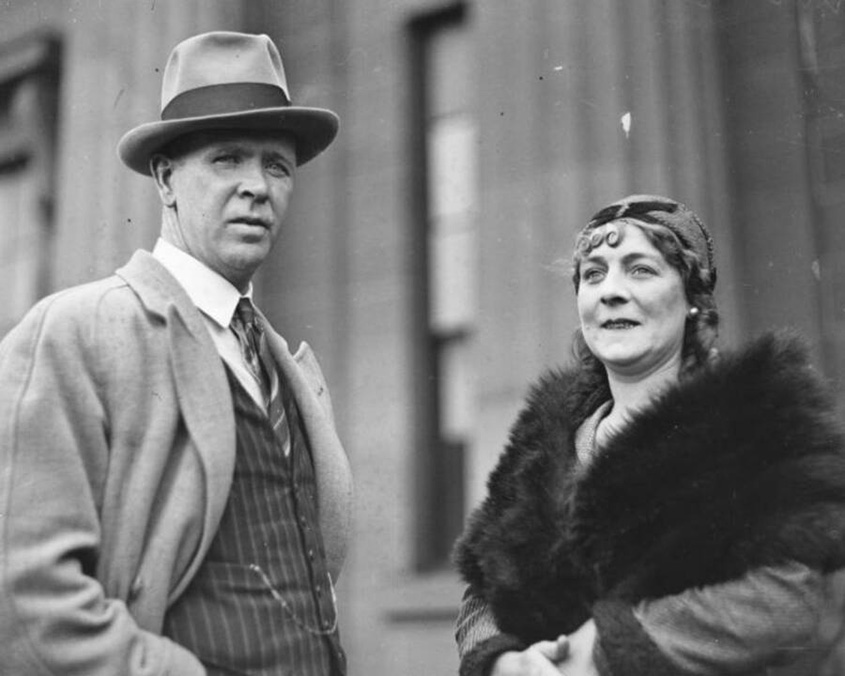 Tilly Devine arrived in Sydney in 1920 as an English war bride after marrying Australian soldier 'Big' Jim Divine during World War I. Photo: Getty.
Tilly categorised her sex workers in a three-tier class system, which Boucher delves into in her episode. The lowest ranked sex workers were on the street and the highest ranked sex workers were “educated and attractive young women,” based inside brothels catering to exclusive clients.
“The ones I found really interesting were the second tier,” Boucher says. “Often, these single mothers lived in the brothels with their children and Tilly would provide them with a safe environment.”
She provided food and lodgings, medical care and importantly, protection from violent or deviant customers.
“Tilly was a remarkable human being,” Boucher says. “She was an incredibly charismatic and skilful businesswoman, who applied that set of skills to the criminal world.
“In her early twenties, she could already see the loopholes and hypocrisies of the law. She’s astutely aware that all the respectable folk who write and enforce the rules… are coming to her on the weekends for sex and drugs. Tilly refused to live by rules written by people who she saw were happy to break them.”
For all this and more, tune into The Dead Can’t Sue on ABC Listen or wherever you get your podcasts. New episodes will be released on Tuesdays.