From empowering students, saving the whales, or curating art galleries – we are proud to share their stories.
Colleen Mitchell
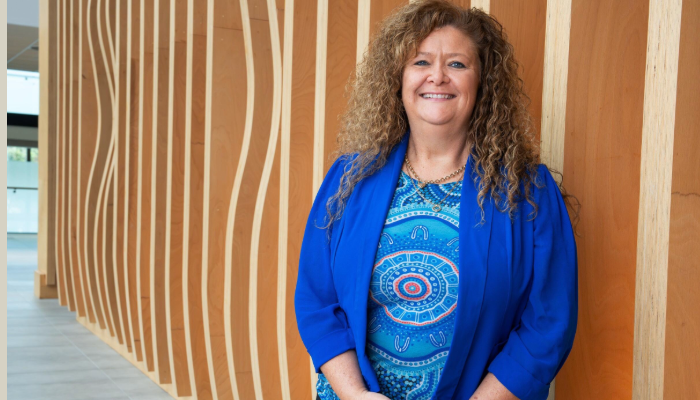
As Director of Walanga Muru, Colleen spent more than 20 years as a teacher before shifting her focus to Indigenous education and student-centred programs.
This is going to sound cliche, but I always wanted to be a teacher. Right from my early days in primary school, that's what I knew I was going to do. I was lucky to have female teachers who instilled that love of learning in me from an early age.
Education is predominantly female-based, but it tends to be men in the leadership space. That is potentially because some of us take time away from work to have children. But being a mother shouldn’t impact our ability to go for a promotion or be seen as a leader.
If we make fabulous educators, you can’t tell me we then don’t make fabulous decision-makers and leaders. Being a mum has given me a greater set of skills, especially in education. That ability to nurture is what makes us great educators in the first place.
My great-great-great-great-grandmother Maria Lock was the first child placed in the Parramatta Native Institution. She was torn away from her family and forced to shed who she was and take on a new culture. She went on to do so well academically and used the skills she had learned to advocate for herself and her family.
We talk about Aboriginal ways of following in the footsteps of those that have come before us, of standing on the shoulders of giants. When I deliver a Welcome to Country, more often than not I reference her story, her tenacity and resilience.
She was a trailblazer, bucking against the system, but paving the way. A lot of her descendants are educators, and I think we have all drawn strength from her story.
Dr Paige Erpf
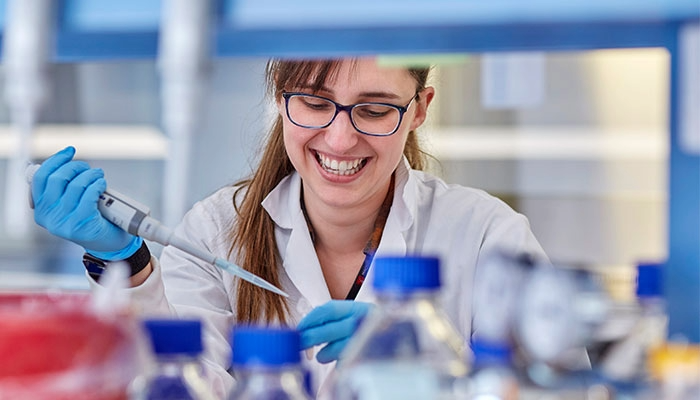
Before her career in genetic engineering,the teenage Paige was fascinated by the story of Dolly the sheep – the first mammal that was cloned from an adult somatic cell in 2003.
When I learned about Dolly, I knew I wanted to be a geneticist – 15 years on, and that's exactly what I'm doing.
At school I had access to chemistry, biology and physics. In those classes there was a mixture of girls and boys, and I never found that there was much of a difference in how everyone was treated, so I got the opportunity to excel in each three of those disciplines.
The best part about being a woman in STEM is I get to showcase to other young women that I am a scientist, that I get to do some pretty cool stuff and that I absolutely love doing it.
The hardest thing is every now and again I will jump into a meeting with my colleagues, and I'll look around and I'll be the only woman in the room. Now, that's not a problem for me, the teammates that I have are wonderful to work with. But every now and again I do wonder... it would be better if there were a few more women in this room.
The one piece of advice that I'd give to other young women or girls looking to pursue a career in STEM or any of your passions, is just do it. One thing that I can say is: be yourself, but unapologetically so.
I found that there were times where I got told, hey, maybe you shouldn't be so open or maybe you shouldn't talk like this or act like this. But I found that the more that I am myself, the more people appreciate me, and it has opened a lot of opportunities.
Yanina Somantri
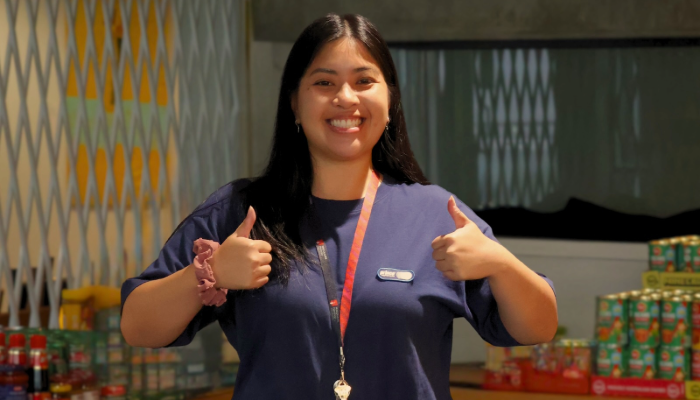
Yanina’s work sees her support students to be nourished both physically (via the Food Hub) and mentally, instilling them with a feeling of belonging.
The best part of my job is seeing students feel confident, connected and supported. I love watching students find a genuine sense of community, build friendships and look out for one another. Being able to play a part in creating those moments and seeing how much they mean to students is incredibly rewarding.
I’ve always been passionate about supporting others and enhancing the student experience. I realised I had the opportunity to turn my curiosity and passion into practical impact, so what began as a small Breakfast Bar stocked each morning with fruit, cereal and muesli bars, has since grown into the Food Hub, providing thousands of serves to students each week.
I grew up in a household shaped by two different cultures – my dad is Indonesian Muslim, and my mum is Thai-Chinese Buddhist. Being surrounded by different belief systems from a young age taught me to appreciate diversity without feeling the need to fit into one category.
That curiosity and openness shaped how I see the world and ultimately led me to study Anthropology at Macquarie as an undergraduate. It’s where my interest in people and community really took shape and it still influences how I approach my work today.
I believe that creating environments where women feel safe to speak up, take initiative and lead without being second-guessed or overlooked is what makes a real difference. Small shifts in how we listen, support and back each other can have lasting impact.
My mum is the strongest person I know and has shown me time and time again that strength, resilience, kindness and confidence are possible even in times of great hardship.
Dr Vanessa Pirotta
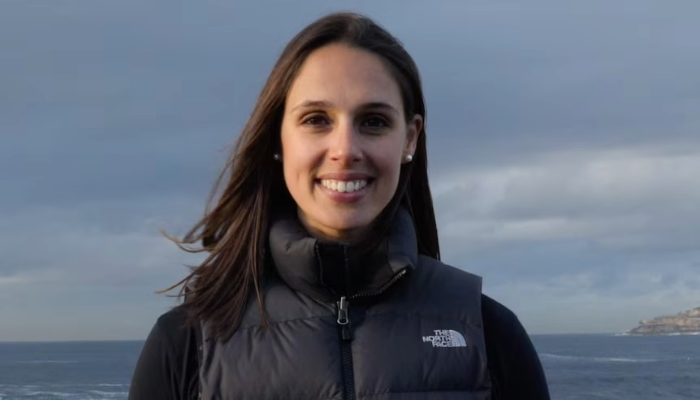
Today a renowned Marine Scientist, Vanessa’s journey to becoming a leading woman in STEM started with a little girl interested in wildlife, water, and what made planes fly.
When I was little girl, I didn't even know what STEM or STEAM was. I can't remember any formal initiatives of, "hey, be a woman in science”.
We are wanting to change that now, so school kids understand that STEM is incredibly important to us all. We're changing the narrative, so when someone thinks of a scientist, they don't just think of a gentleman in a lab coat. We do so many different things.
The best part of being a woman in STEM is the way I see the world, especially as a mother. It has completely changed the way I see my research about whales. It has given me the opportunity to see things in a different way and to ask better questions in science.
A downside of that would be multitasking and juggling kids and science. Sometimes your kids don't understand when you need to do some science things and then interviews. Trying to be a scientist and help get all the facts and having a little kid in tow – it can be a juggle.
If I could provide just one piece of advice for women and girls starting their career in science, it would be to know that there's only you and no one else is like you. Also the path to where you want to go might look a little different than expected. These things can take time but just use that passion and excitement and remember what it is that made you start.
Lauren Bradshaw
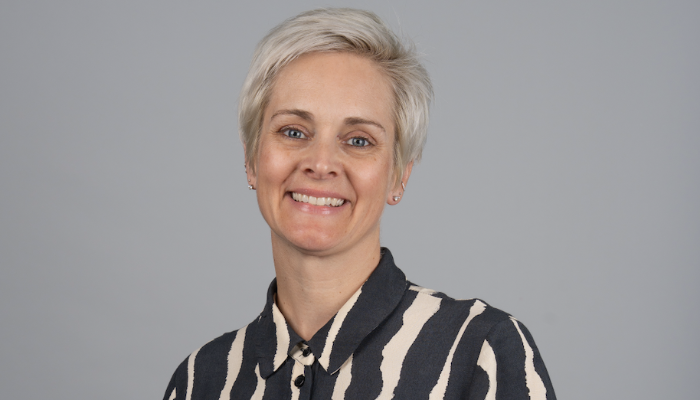
Lauren Bradshaw got her doctorate in Cell and Molecular Biology, spent 12 years out of the workforce to be with her children, and now delivers strategic IT projects at the University.
I’ve always been curious about how things work and wanted to understand the world at a deeper level. After completing a Bachelor of Science, I went on to complete a PhD in Cell and Molecular Biology (cancer focus), where I learned how to approach complex problems in a structured, evidence-based way.
My career path changed when I stepped away from research to raise my family. I spent 12 years focused on my children, and that experience completely reshaped things. At the time, flexible work options weren’t widely available, and it felt like you had to choose between being present for your family or progressing professionally.
When I returned to the workforce, I moved into a support role at the University and gradually into digital transformation and strategy roles, where I could combine curiosity, problem-solving, and people-focused work. My favourite part is talking to people about what we’re doing and helping them understand the ‘why’ behind it. The most rewarding moments are when someone looks at the output and says, ‘that makes sense’.
In the future I’d like to see more genuinely flexible career paths, especially for parents and carers. Careers aren’t always linear, and many women become incredibly efficient and effective because they learn to do a lot in limited time. If organisations recognised that and designed roles around outcomes rather than hours, we’d see more diverse leadership and better retention of talented people.
If I could speak to myself when I was re-entering the workforce I’d say: don’t undervalue yourself. You have skills that translate, and they add real value. Just start, and the rest will fall into place.
Sally Hurst
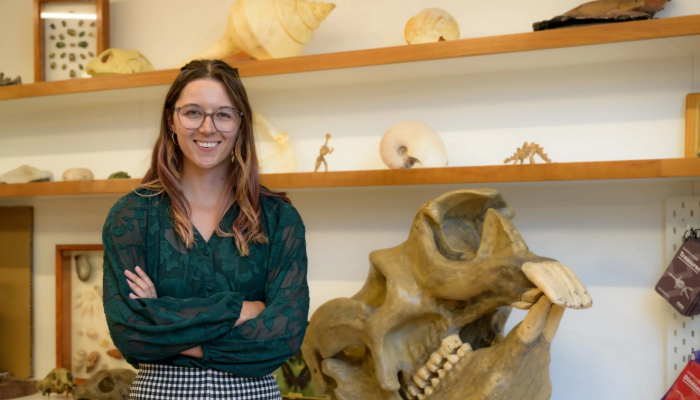
From fossil shops, giant WhatsApp groups and stand-up comedy, Sally Hurst’s palaeontology career has been full of surprises.
The first experience that's very memorable to me was my sister's sixth birthday party because we went to the National Dinosaur Museum in Canberra. I was a dinosaur kid.
It wasn’t until year 10 when I was looking for work experience that I remembered the Dinosaur Museum. For a week I was helping in their fossil shop and following around all the tours. By the end of the week, they had hired me. I absolutely loved it. That was really what inspired me to come to Macquarie and study paleontology.
It took a while to realise I could do this for a career, because there weren't really any role models. The hardest part about being a woman in STEM is the lack of representation. It would be nice to see more women in senior positions who I could look at and say, "that's who I want to be when I grow up."
I'm part of a program called Superstars of STEM, and it's 60 female and non-binary scientists from around Australia. We have a giant WhatsApp group that we post in all the time to celebrate each other's triumphs or vent about challenges at work. It's just such a gorgeous community.
There have been so many opportunities that have come up for me that 16-year-old Sally never would have imagined. I was offered a chance to do a gig about my research at Sydney Comedy Festival. I was invited to the Natural History Museum in London to do a talk. I think even if these things scare you, just say yes and see where it takes you.
Belinda Tiffen
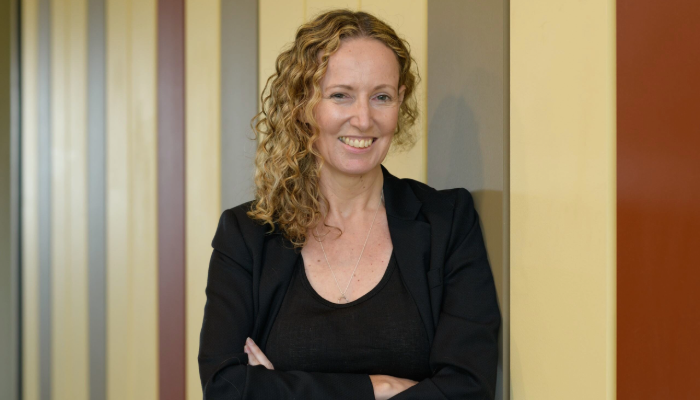
University Librarian Belinda Tiffen fell in love with libraries because of what they represented - a safe and welcoming space to access free information and new ideas.
I am responsible for the University Library Art Collection. It brings me into contact with amazing people, scholarship and culture on a daily basis. I don’t think you can ask for more than that in terms of job satisfaction.
I’m a terrible cliché (and nerd) but I loved going to my local library as a kid. As I got older, I started to understand how important that experience was. That concept of the library as a vital community space and service was what inspired my interest and is the thing that still inspires me.
As a child, I was inspired by poet and playwright Aphra Behn. A bit of an obscure choice, but I learnt about her during an undergraduate degree in seventeenth century literature and became an admirer. She was an incredible talent who was a pioneer for women writers in a very male-dominated field.
Librarianship has traditionally been a female-dominated profession, which means there have been wonderful opportunities for women, but like other female-dominated fields it has struggled to be taken seriously as a profession. I’d like to see the complexity and professionalism of the work in librarianship better recognised.
I don’t think I have much advice for my younger self. It wasn’t all smooth sailing, but you learn and grow from making mistakes - so maybe my advice would be, don’t worry so much about the mistake.