
Our distant relative, Homo erectus, is known for many human achievements. It was the first human to exit Africa and the first to use fire. It also survived for almost two million years in open woodland savannahs.
But flexible, adaptive and mobile are not usually words to describe this ancient human. Until now.
Two new papers published today in Nature by our international team of researchers paint these humans in a very different light.
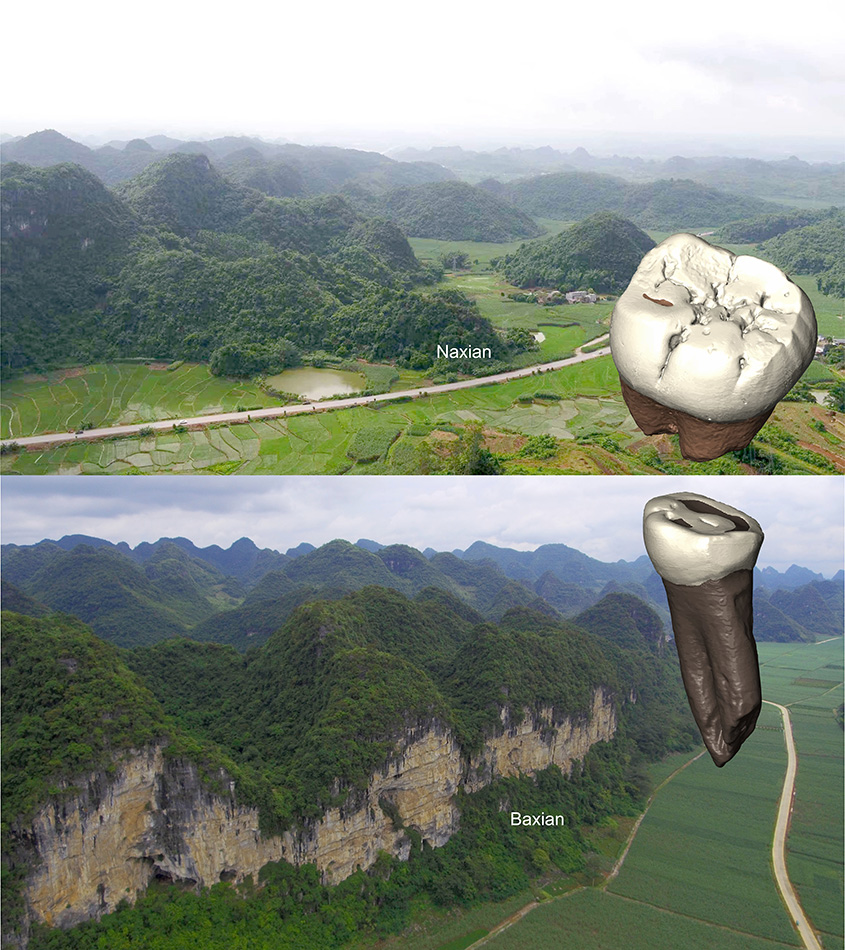
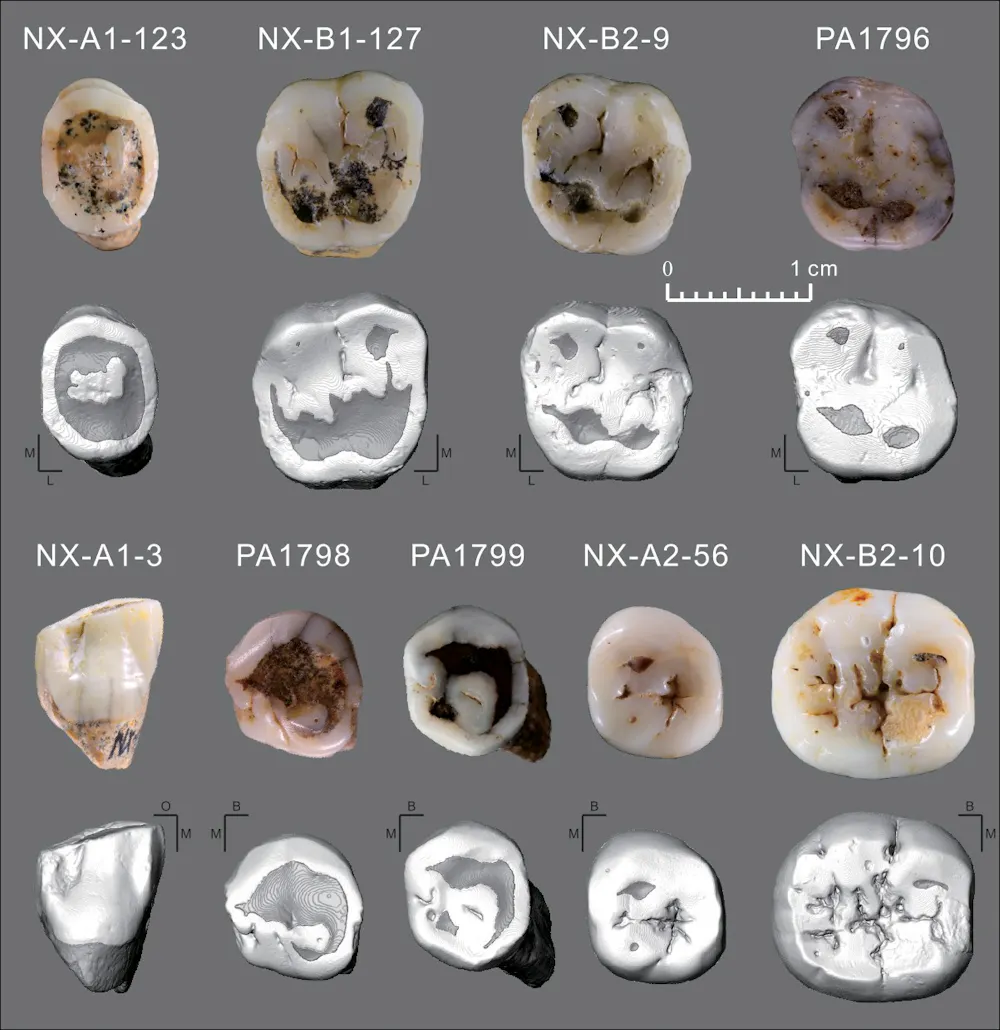
The team explored two neighbouring caves in Guangxi province of southern China. They uncovered nine human teeth that contain many secrets about how these ancient humans survived.

The landscape around the entrance to the Baxian cave in China. Photo: Kira Westaway.
A late survivor
Eight of the teeth were identified as Homo erectus using their shape and ancient genetic signatures. Their age revealed this species was still surviving in southern China between 324,000 and 184,000 years ago.
This is 100–200,000 years later than previously established. At that time Homo erectus was thought to have disappeared from China.
This new timeline was established using a combination of five different dating techniques. These were applied to the teeth, surrounding cave sediments and mineral formations.
The results confidently place these humans in this landscape at a time when we thought they were already regionally extinct. This is the youngest securely dated evidence for Homo erectus in mainland China.
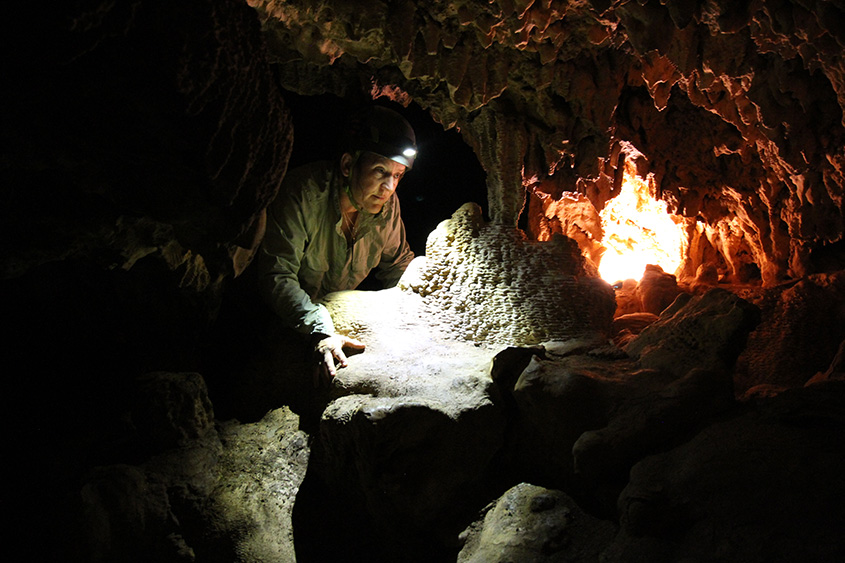 Macquarie University Professor Kira Westaway exploring the Naxian cave. Photo: Kira Westaway.
At home in the rainforest
Rainforests are demanding environments. It can be difficult to find food, move through the dense landscape and survive. In fact, the spread of rainforests in Southeast Asia has been linked to the disappearance of some ancient human groups.
The teeth were discovered in cave sediments with over 19,000 other animal fossils. Their chemical signatures suggest the people they belonged to were living in dense rainforest conditions.
Teeth found in the Naxian and Baxian caves. Photo: Kira Westaway.
The signatures for the Homo erectus teeth also showed they were drinking and eating in this challenging environment – a far cry from the “less demanding” open woodland savannahs.
Scientists thought only our own species, Homo sapiens could cope with dense rainforests.
But the new evidence from southern China shows the relationship between ancient humans and tropical forests was more complex. Could it be that the younger populations of Homo erectus were more flexible and adaptable than we previously considered?
Travelling far as children
Additional chemical signatures from the Homo erectus teeth were used to reconstruct how they moved across the landscape.
Strontium is a chemical signal in the enamel that is linked to the local geology. By analysing the strontium in these teeth, we found that some individuals may have spent their childhoods moving through the wider forested regions.
The humans may have covered surprisingly large areas rather than remaining in one small, localised area around the caves. They may have travelled as far as northern Vietnam and mainland Southeast Asia.
Our understanding of this mobility is restricted to just their childhoods. This is because the strontium signature is only laid down in the enamel during the first seven years of life.
This means our awareness of their adult movement is limited.
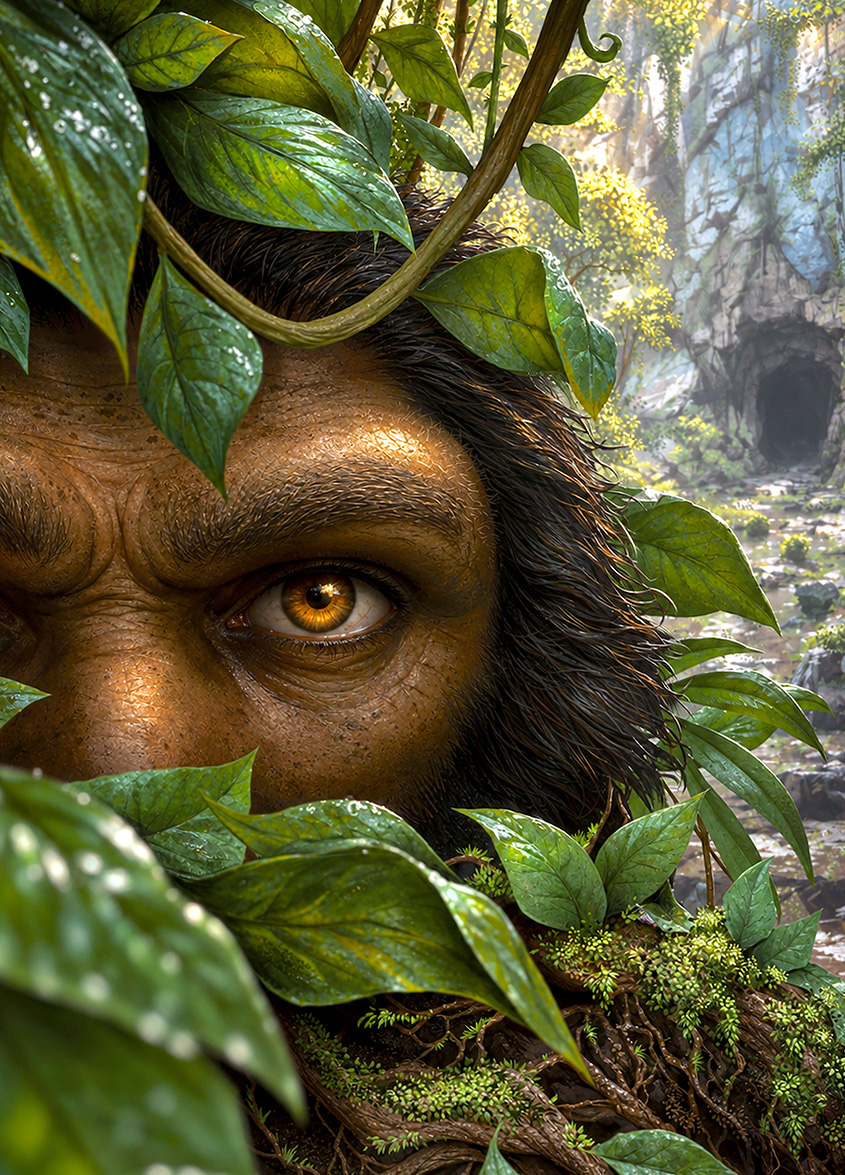 Illustration of Homo erectus lurking in the shadows of a tropical rainforest in Guangxi. Photo: Garciat/Johannes-Boyao.
The proximity of the caves and the overlap in timelines suggest a single population of Homo erectus was surviving within at least a roughly 15 kilometre radius in the rainforests between 324,000 an 184,000 years ago.
Rather than being restricted to their preferred open landscapes, these populations had the ability to survive in tropical forests. Furthermore, they could move across a wider landscape outside the limestone hills.
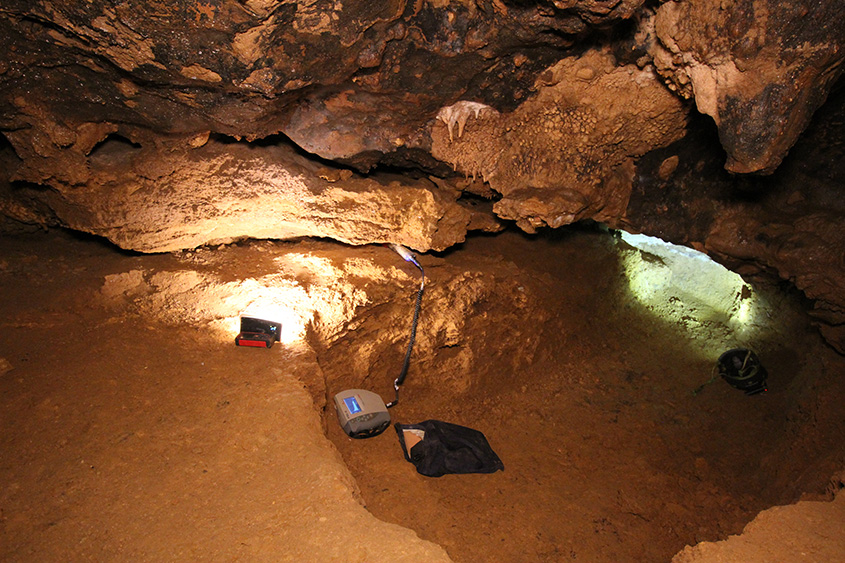 Naxian fossil chamber. Photo: Kira Westaway.
The big picture
This newly discovered ability has implications for our understanding of the fate of Homo erectus in China and calls for a reassessment of their flexibility and adaptation to environments outside their preferred habitat.
It also questions our assumptions over the fate of Homo erectus in Java and the cause of their ultimate extinction. It was assumed they were unable to adapt when their preferred open woodland environment changed to rainforest. But this new evidence in China suggests they may have had the ability to be more flexible in Java. If so, what was the environmental event that caused their downfall if not pressure from the encroaching rainforests?
This can only be solved by the use of a similar chemical signature analysis of human and animal teeth in other regions, as seen in these two studies.
One thing is clear: the skills and abilities thought to be the traits of only modern humans are increasingly being observed in ancient humans. Further analysis of fossil human teeth may provide more secrets.
This article was originally published on The Conversation.