
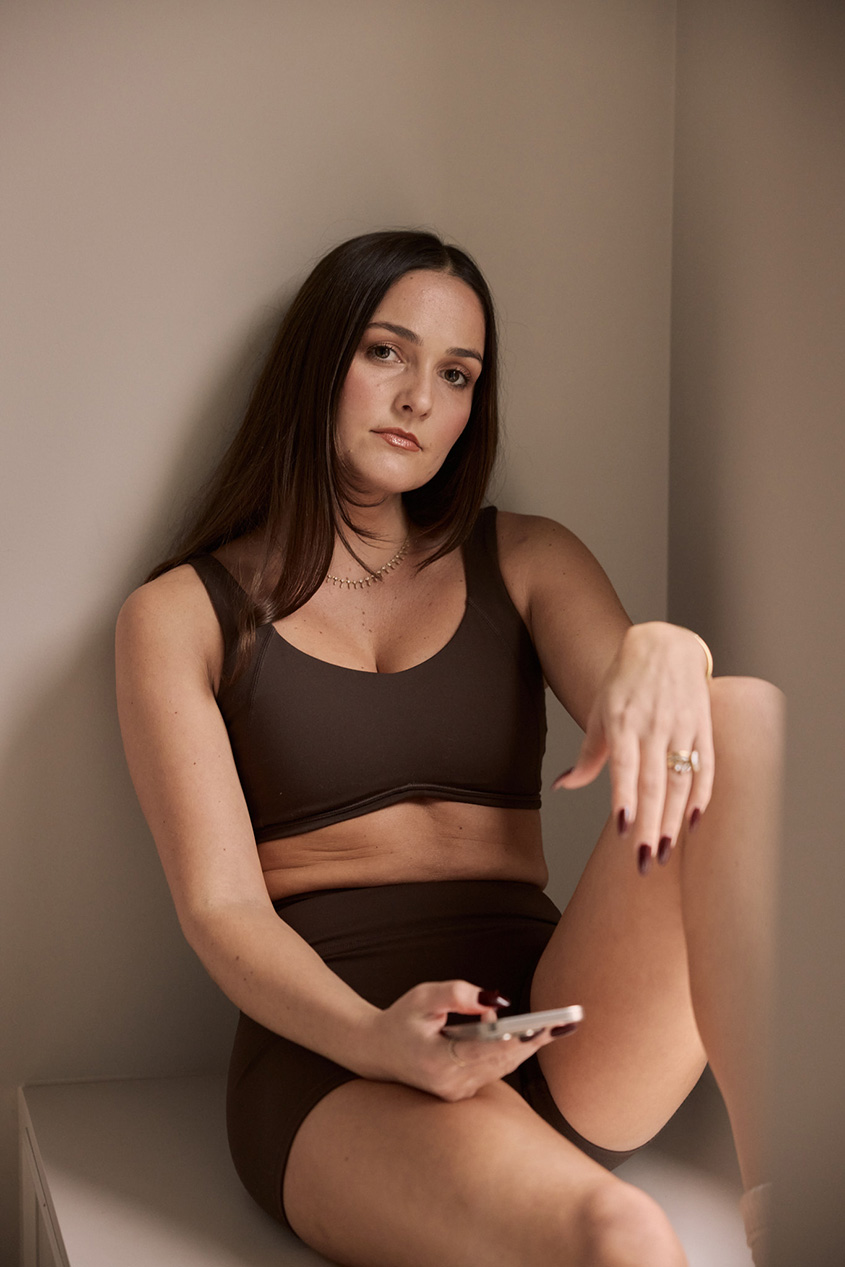
Dr Ariella Heffernan-Marks. Photo: Supplied.
Ariella Heffernan-Marks spent seven years and thousands of dollars in pursuit of a chronic health diagnosis. Today, her women’s health start-up, Ovum, is valued at $18million and is used by thousands of Australian women and healthcare practitioners alike. But as a third-year medical student, she experienced firsthand the pervasive “gaslighting” of women in healthcare settings when her vestibular migraines were dismissed as anxiety.
“I had chronic dizziness, facial pain every day, and debilitating cognitive fatigue,” she recalls. “I was struggling to stand up in clinical placements. I had incredible support from the faculty and my teachers. But at the same time, I was begging doctors separately for medication.”
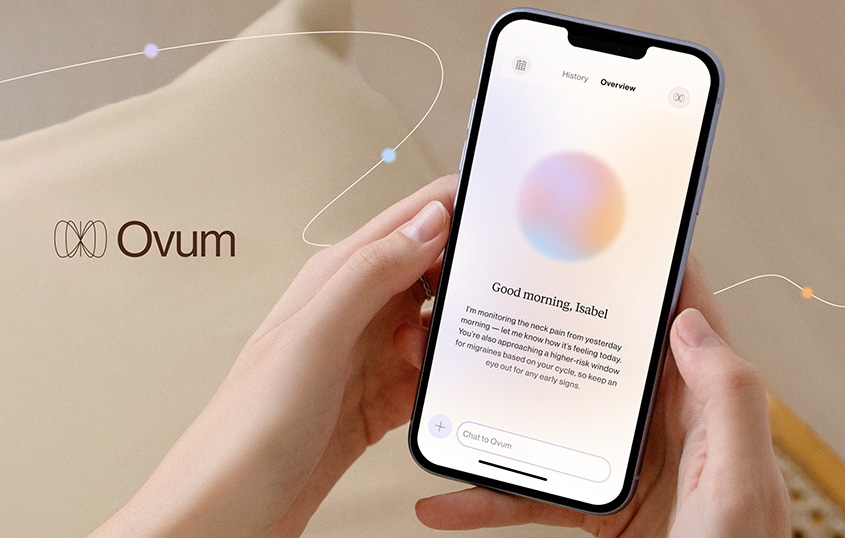 Ovum is an AI-driven app that provides personalised health insights through daily conversation. Photo: Supplied.
Then 28-years-old, the junior doctor was working three jobs, completing a double degree in law and medicine, and hitting the gym seven days a week. That was before five separate neurologists, and too many GPs and ED’s to count, downplayed her symptoms to stress— “even as my entire identity was being fundamentally shifted.”
Her story is not the exception but the rule, with the gender health gap costing the global economy $1 trillion annually. Australia’s first Inquiry Into Women’s Pain this year found that many women had been gaslit by medical professionals or made to feel at fault when asking for medication for their pain. Of 13,000 women who shared their experiences with the eight-month process, 90 per cent of respondents experienced pain that lasted over a year, with 54 per cent experiencing it daily.
Dr Heffernan-Marks holds a Doctor of Medicine from Macquarie University and a Bachelor of Science in Reproductive Biology and Embryology. As she completed her training across emergency rooms, large metropolitan hospitals, and rural doctor’s offices in Queensland and Victoria, a pattern of women's disempowerment and dismissal emerged—mirroring her own.
“Abdominal pain is one of the symptoms I would see continually dismissed in these placements,” she says. “I vividly remember one woman who came into ED screaming in pain. There were a bunch of nurses sitting around, just laughing and calling her a drug shopper. As a medical student, I went up and sat with her. If this girl was an opioid addict, I would’ve been able to distract from her pain, and I could not.”
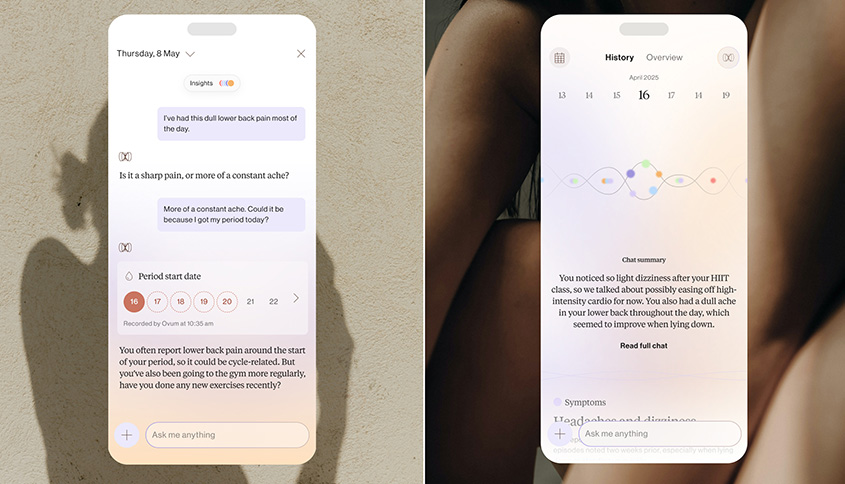
Ovum learns from every chat and remembers what’s important to you, so it can spot patterns over time. Photo: Supplied.
The experience ignited a fierce determination in Dr Heffernan-Marks to address what she calls an “insidious bias” rooted in the Victorian era. Medical training and clinical research have historically treated the male body as the default. Women were routinely excluded from early drug and treatment trials due to the perceived complications of hormonal fluctuations. Medical science assumed findings from male biology could just be applied to women, as if they were only smaller men. “I realised all the clinical research that I was being trained on wasn’t even representative of my body,” she says.
“I was driving down to Northern Beaches Hospital one day and had a lightbulb moment. If we have a book that tracks children’s development over time, where all their health data and records are seamlessly integrated, why can’t we do that for women?”
Using Ovum, women can log symptoms, biometrics, medications, lifestyle choices, and reproductive history. The AI-powered app helps women identify patterns and prepare questions to carry into the consulting room. Ovum is not about using AI to replace doctors, Dr Heffernan-Marks stresses, but empowering patients to hurdle the systemic roadblocks to correct diagnosis: “When women feel like they can advocate for themselves in clinical settings, they engage more in shared decision-making and preventative health behaviours,” she says. “At the same time, we are creating one of the largest women’s health longitudinal data sets in the world.”
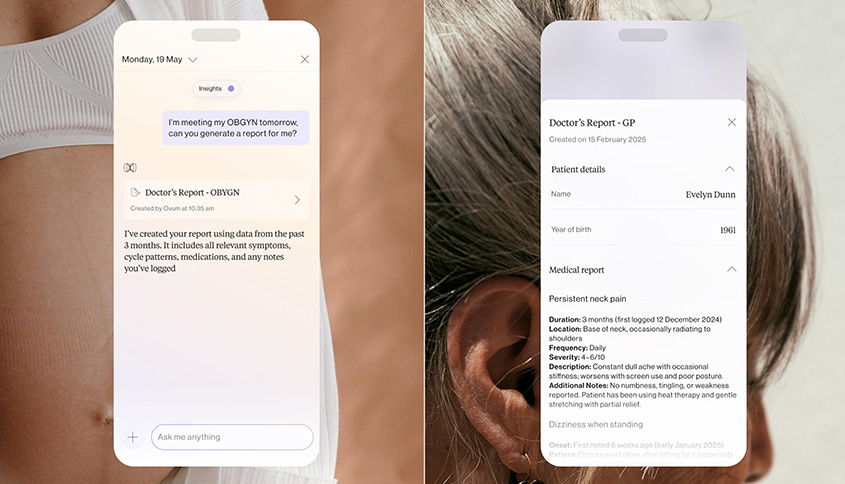 Create doctor's reports based on relevant chats. Photo: Supplied.
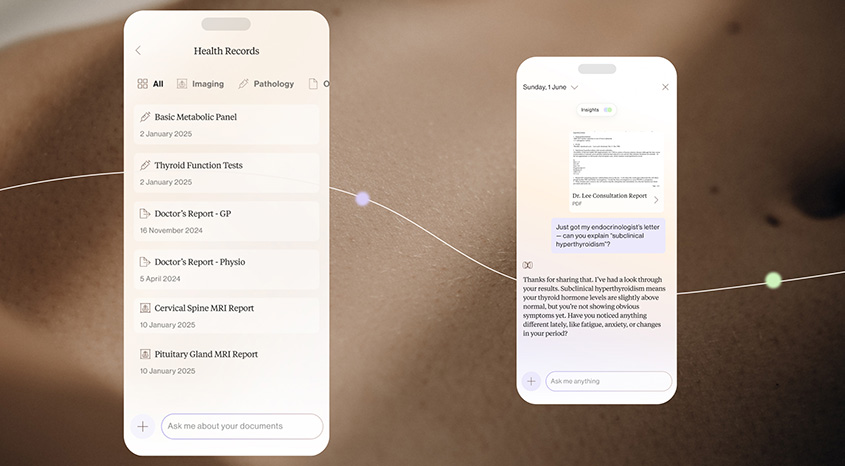 Organise your medical documents and scans. Each file is automatically sorted for easy access. Photo: Supplied.
Since launching in August 2025, Ovum has grown 44 per cent month-on-month, surpassed 30,000 downloads, logged more than 204,000 AI health conversations and captured 257,000 health insights from women aged from 15 to 84. The app launched clinical trials earlier this year with St George Hospital and the Royal Hospital for Women in Sydney.
Dr Heffernan-Marks signed up Medibank, the nation’s largest private health insurer, before she had a product. Deals with Fernwood Fitness, Swisse, Sweat, and Menopause Friendly Australia have followed, alongside pilots with Australian Red Cross Lifeblood and Mecca.
She is now beginning the first study in Australia to assess AI as a preventive health tool designed specifically for women. The research focuses on understanding how women currently manage their health, the digital tools they rely on, and how AI may support greater health confidence, self-advocacy and continuity of care.
She says 83 per cent of Ovum’s users have agreed to hand over their anonymised data for research, which speaks to the trust she’s built employing a team of Australian doctors to test, train, and review the AI’s performance daily. Ovum is data sovereign and meets high-threshold SOP2 and GDPR cybersecurity and data privacy frameworks. “Priority number one is ensuring that data is always protected,” she says.
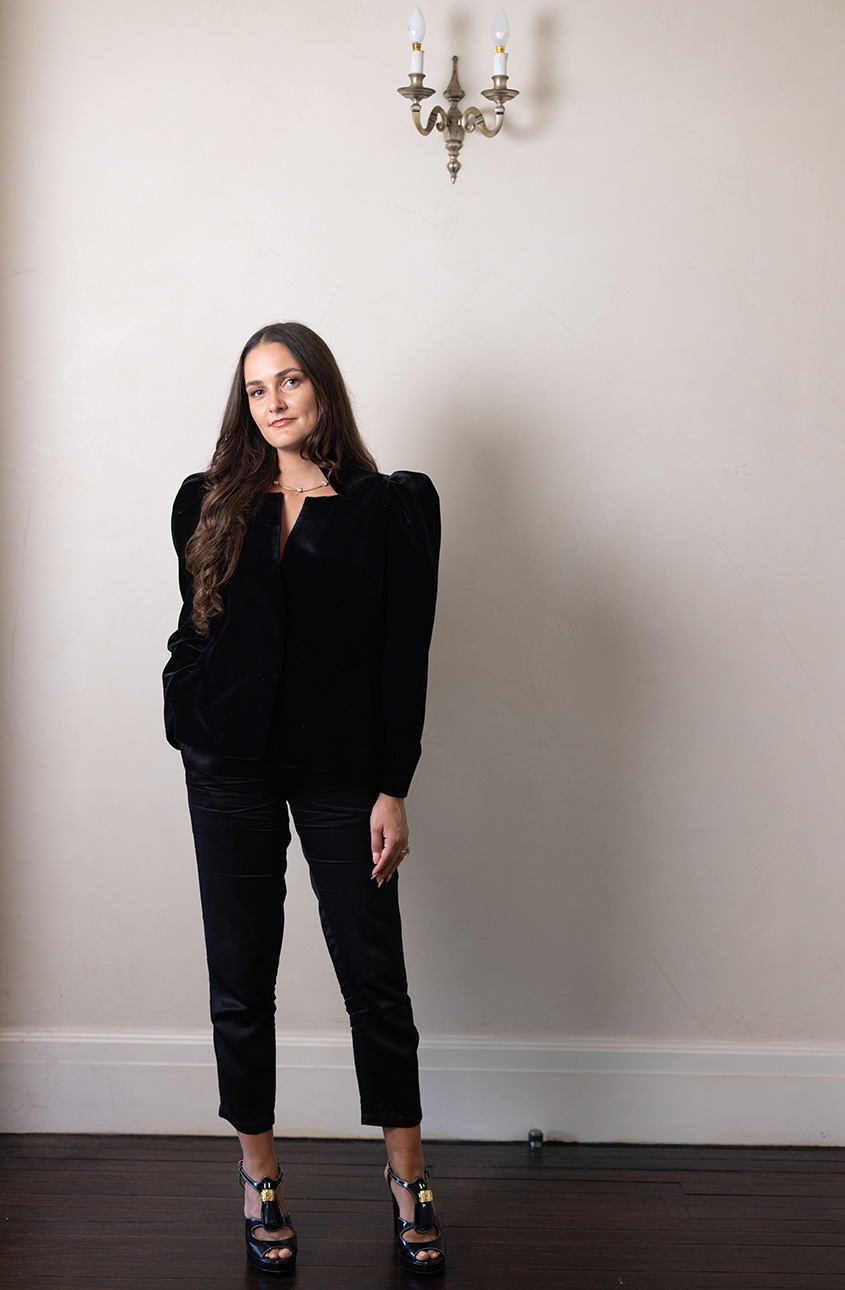 “As a young girl, I was always ambitious and creative.” Photo: Supplied.
The app will launch in Singapore and Hong Kong next, with plans to eventually roll out across the Asia-Pacific. “If we want to be the smartest AI for women’s health in the world, we can’t just be in Western countries, right?” Dr Heffernan-Marks says. “Otherwise, when we’re looking at diagnostic trends, risk factors are so different for different populations of women and the socio-economic factors that surround them.”
“I never set out to be a businesswoman,” she adds. Ovum began as a “creative outlet,” during her final medical exams. She describes canvassing femtech organisations, attending entrepreneurship crash courses, and finding investors as her “hobby” that snowballed.
One week after pitching her Beta app to two tech creatives, conversational AI models hit the open market— enabling its creation. Dr Heffernan-Marks was still completing her final medical internship at the time. “I decided I’d spend six months trying to raise money and if I couldn’t do it, I’d leave it there,” she says. “Many of my first investors said I should focus on one condition, but I refused. Women’s health is not siloed.”
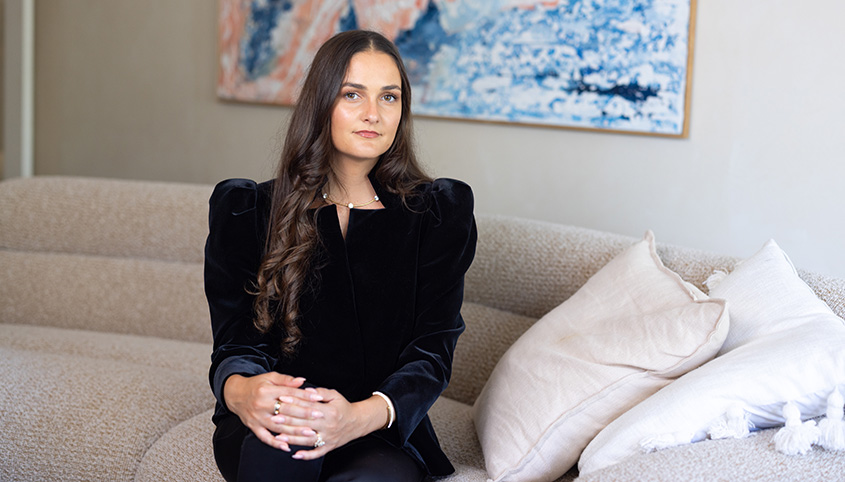
Dr Ariella Heffernan-Marks. Photo: Supplied.
The top conditions reported by Ovum users include anxiety, ADHD, PMOS, endometriosis, fertility issues, and Crohn’s disease. These initially present with symptoms of generalised fatigue, headaches and migraines, gut issues, and menstrual-related ailments. “Large clusters of women are reporting the same sets of multiple diagnoses,” Dr Heffernan-Marks says, “and this could be a game-changer for both our understanding and treatment of chronic illness.”
The transition from academic to founder has often been a “lonely” one, she admits. A doctor’s career path is clearly structured, and hospitals are busy places full of human interaction. “If you make a mistake in medicine, you could kill someone. My subconscious has internalised that training.” Whereas start-up founders often work alone, must define their own milestones, and “be willing to fail,” in pursuit of revolution.
Hindsight is 20-20. Dr Heffernan-Marks first studied law in the interest of landing a “secure” job. She picked up a biology elective after medical malpractice lawsuits piqued her interest. Changing tack to a medical degree, she then felt certain of becoming an OBGYN. “The best advice I can give to future Macquarie graduates is follow your intuition and your interests,” she says. “Taking that extra class, doing that extra degree, led me to medicine, which allowed me to see the system and how broken it was.”
Recently, a man who heard Dr Heffernan-Marks speaking at the Australian Technologies Competition recommended Ovum to a friend who’d been in poor health for years. The woman had been admitted to emergency departments several times, unable to stand. Ovum noticed a differential in her data, enabling her GP to consider other potential causes. She was ultimately diagnosed with vestibular migraines, the very same condition Dr Heffernan-Marks set out to solve for herself.
“I’m most proud that Ovum does what I said it would,” she says, “and that the world is finally listening.”