
Tutankhamun is perhaps one of the most recognisable figures from ancient Egypt, yet there is a story in his history you may not know.
When researchers excavated his tomb in 1922, they found more than 100 walking sticks among the thousands of objects inside. The remains of medicinal plants were also found in the tomb, offering further insight into the material deemed necessary to accompany the pharaoh into the afterlife.
More than three thousand years later, the stories they might tell us about disability in the ancient past are less familiar – something PhD archaeology student Hannah Vogel is hoping to change.
In the space between what the archaeological record reveals and what our histories choose to acknowledge, Vogel is exploring the ancient past through the lens of disability.
“I did an essay in the second year of my undergraduate degree, which asked about the “others” in ancient Egyptian society, and it gave a list – on that was women and ethnic minority groups, and not on that list was the disability community.” explains Vogel.
“That got me thinking about, if we think about the disability community, what is their past? And how does the public perceive that? How does academia perceive disability in the past?”
Despite the glaring gaps in institutional recognition, Vogel emphasises that disability is hardly absent from the ancient world. For example, Ancient Egyptian religion includes gods such as Bes, who was always depicted with dwarfism.
Across cultures, and over time, there is ample archaeological and historical evidence to explore the lives of people with disability.
By bringing these stories to the forefront, Vogel’s work extends beyond the university and into our broader society, helping ensure disabled lives are not only found in fragments, but recognised as essential pieces of an innately human puzzle.
“The very presence of disability in the ancient world is not new. It’s prolific – which asks the question, what does that mean for bodily norms scholars have been using?”
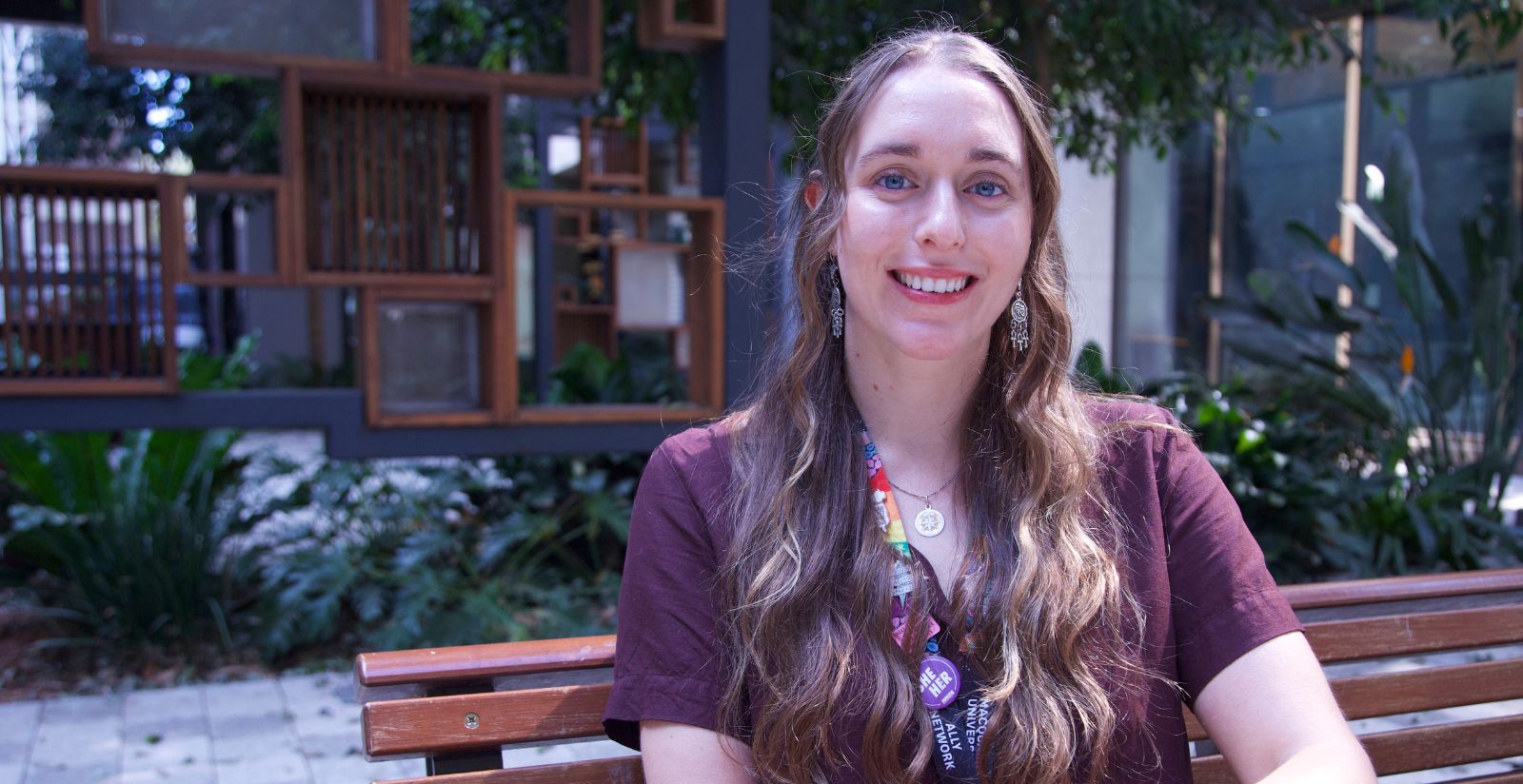
Hannah Vogel is exploring the ancient past through the lens of disability. Image: Elaine Obran
It’s a question that matters just as much as the gaps in the historical record.
As Vogel explains, leaving disabilities out of the stories we tell does more than create an incomplete picture of history; it can, concerningly, shape whose lives and experiences are remembered, recorded, and retold.
“If we represent human history as absent of disability, that’s dangerous,” says Vogel.
“Archaeology as a discipline also has a responsibility to challenge eugenic narratives about bodily norms - archaeology has been used to legitimise eugenics in the past, and so we have a responsibility to challenge that narrative, which has caused significant harm to many communities, but especially the disability community today in recent history.”
The past, then, is not safely sealed away behind glass. It is tangible and still with us – something Vogel wants to make impossible to ignore.
As an extension of her current work, she is opening an exhibition on 3 December – the International Day of Persons with Disability – that explores how archaeology can be made more accessible while also placing disability at the centre of its story.
“The exhibition itself includes a Braille book. It includes tactile 3D models, and a fabrication of a particular scene that’s on a vase,” explains Vogel.
“It is also going to have audio descriptions and Auslan videos, while the website will feature 3D scans and photographs. Other accessibility features include short text that can be read aloud, and these will also be incorporated into the exhibition itself, which focuses on the archaeology of disability. The display is inclusive of disability in archaeology and archaeology of disability, it brings both together.”
In that sense, Vogel’s work becomes an invitation for current and future students to claim their place within archaeology – and to recognise that the histories we inherit are not fixed, but shaped by the people who choose to study, question and retell them.
It is a reminder, perhaps, that there is always more to the story. Three thousand years ago, Tutankhamun’s walking sticks were prepared for a journey into the afterlife. Today, they offer another kind of journey: a way into the past that can bring us closer to ourselves in the present.
“For students specifically with a disability, you have a place in the university because every person’s perspectives offer a new picture of the past,” says Vogel.
“And the more pictures of the past we build, the closer we are to the diverse reality of what actually happened in the past. If a group is excluded from the story, it doesn’t mean they don’t exist.
“The more people come and study archaeology or history, the more we can learn about humans, both now and for the future.”