
Bringing together leading researchers and clinicians working across motor neuron disease (MND), dementia and Parkinson’s disease, the new Macquarie University Brain Institute and Clinic will unite research and patient care to accelerate discoveries that improve diagnosis and treatment.
Neurodegenerative diseases are among the most complex and devastating conditions in medicine, affecting hundreds of thousands of Australians and their families. Degenerative brain diseases are one of the leading causes of death worldwide.
Parkinson’s is the fastest-growing neurological condition in the world, affecting 10 million people globally and 150,000 people in Australia. An estimated 2,800 Australians are currently living with MND, with the disease accounting for almost 800 deaths annually – or one in 250 deaths nationally.
Meanwhile, more than 430,000 people in Australia are living with dementia, with Alzheimer’s being the most common type (approximately 70 per cent). The number of Australians living with dementia is expected to increase to 1.1 million by 2066.
While research has transformed our understanding of these diseases, effective treatments remain limited and there is an urgent need to translate scientific breakthroughs into improved outcomes for patients.
Vice-Chancellor Professor S Bruce Dowton said the new Brain Institute and Clinic represents the next stage in Macquarie University’s sustained investment in research, clinical care and education in neurological disease.
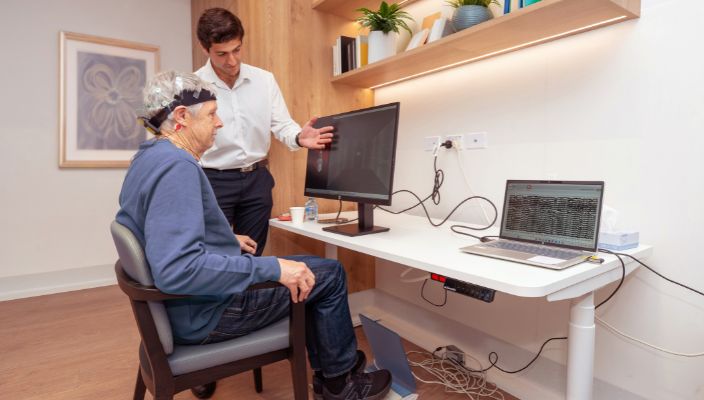
The Brain Institute at Macquarie University will bring significant expertise in neurological research under one roof.
“MND, dementia and Parkinson’s are devastating diseases for individuals and families. Despite decades of research, they remain difficult to diagnose and treat, and there is an urgent need to turn scientific advances into better outcomes for patients,” Professor Dowton said.
“Macquarie University has spent more than a decade building significant expertise across neurological research, clinical care and education. The Macquarie University Brain Institute and Clinic represents the next stage in our mission.
“By bringing these capabilities together under one roof, we can create a genuinely integrated model in which research, clinical care and education continually inform one another.
“Our ambition is simple: to make collaboration the default and through collaboration, accelerate the discoveries, treatments and care that can improve the lives of people living with brain disease.”
The new Brain Institute and Clinic builds on Macquarie University’s innovative healthcare model, which is home to the only university-based not-for-profit private hospital in Australia and combines patient care, research and discovery and teaching.
Unlike traditional research centres that operate separately from clinical services, the Macquarie University Brain Institute and Clinic has been designed to bring research and care together.
Professor Patrick McNeil, Executive Dean of the Faculty of Medicine, Health and Human Science and Managing Director of Macquarie University Health, said this distinctive healthcare model means discoveries can inform patient care more quickly, clinical experience can generate new research questions, and patients can play a direct role in advancing understanding of neurological disease.
“Medical research often starts in the laboratory, but translating a discovery into a treatment that can benefit patients can take 17 years, ” Professor McNeil said.
“At the Macquarie University Brain Institute and Clinic, researchers and clinicians will work side by side, creating a much more direct connection between discovery and patient care.
“Clinical experience can help shape the questions researchers investigate, while new discoveries can be translated into clinical practice more quickly.
“Macquarie’s healthcare model gives us a unique opportunity to do this at scale – bringing research, treatment and education together around the needs of patients.
“The stakes could not be higher. But brain science is also at a pivotal moment, and we have an opportunity to change what is possible for people living with MND, Parkinson’s and dementia.
“That is why we have established the Brain Institute and Clinic: to put the power of research to work for patients.”