
There is a familiar sentiment echoing through our post-pandemic world – we are continually living through “unprecedented times”.
And it is not difficult to see why.
Climate tipping points have been surpassed, wars have erupted, and old conflicts have been reignited. The cost of living continues to squeeze households, while tensions between major powers are reshaping alliances and disrupting economies.
But amid all this uncertainty there are people who refuse to sit quietly and wait for the next crisis to arrive. Associate Professor Adam Lockyer is one of them.
When Dr Lockyer began studying international relations in the 2000s, the shockwaves of September 11 were still reshaping how governments, militaries, and researchers understood security.
Now, as the world enters a new era of profound uncertainty, Dr Lockyer is asking how prepared Australia is for what comes next.
It is a question that has led him to a new undertaking, establishing and leading Macquarie University’s Geopolitical Risk Research Centre, which will launch in September this year.
“My background is in international relations, with a speciality in defence and strategic studies,” explains Dr Lockyer.
“That’s looking at the causes of strategic competition, war and conflict.
“Though the centre is housed within the Faculty of Arts, the success of the Geopolitical Risk Research Centre will depend upon collaborations from across the University.”
Australia is increasingly exposed to geopolitical challenges from global threats which were once far away, and Lockyer argues multidisciplinary expertise will help overcome them, pointing to the recent crisis over fuel prices.
A blockade in a distant shipping lane can now quickly empty shelves. A geopolitical dispute can ripple through industries, jobs and household budgets before most people have even heard the name of the place where it began.
And then there is the very real possibility of multiple crises unfolding at once.
Like dry grass in the middle of an Australian summer, the conditions can be quietly accumulating – all it takes is a spark and a hot breeze.
“Australia is one of the most globalised economies in the world - we’re more linked into the international marketplace than almost anyone else,” Dr Lockyer explains.
“Even when we consider one of the few Australian industries where we think that we’re self-reliant we quickly discover that in fact it’s highly exposed to geopolitical risks.”
“Australia is self-sufficient in food production, for example, but this industry is completely dependent upon the reliable importation of fuel, machinery, fertiliser, irrigation systems, labour, pesticides, and the list goes on and on.”
“So what does the possible disruption to international networks, international trade and supply chains mean for everyday people?
“It’s crucial for our lives. It’s not just about what you can buy but also having a job, and doing your job, requires access to global markets.
“One thing we need to do is think through how we can continue to exploit international trade and get all the fantastic benefits that derive from it, while reducing some the vulnerabilities that it creates? Those are the key questions.”
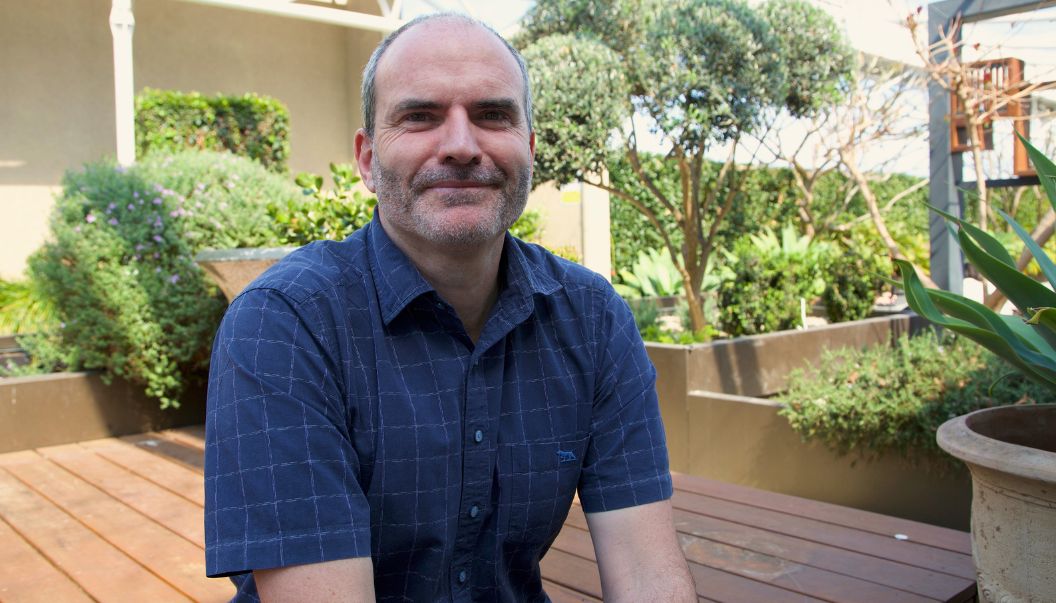
As the world enters a new era of profound uncertainty, Dr Lockyer is asking how prepared Australia is for what comes next.
This, of course, is where the Centre comes in.
“We’re not just looking at the causes of the risks; we also want to look at solutions.
“Sometimes, that might be political solutions, but often it’s going to be about innovation. That then brings in other parts of the university, including health, medicine, science and engineering. They can come up with discoveries that will help us respond to and mitigate some of these risks.”
Rather than trying to tackle every possible pressure point at once, the Centre will examine areas where Australia’s vulnerabilities and opportunities are particularly intertwined: China and Northeast Asia, supply chains, and maritime security sovereign capability.
“China is the perfect example of an actor that is both a huge economic opportunity that also presents multiple geopolitical risks.
“The size and dynamism of the Chinese marketplace is now second to none – it's no longer a follower or a factory – there is real innovation there.
“One of the key areas we want to look at is China as a potential opportunity, but also a potential risk.
“The second priority is supply chain resilience."
The travel restrictions during the COVID-19 pandemic, and more recently the surge in fuel prices linked to the closure of the Strait of Hormuz, have highlighted another vulnerability - Australia’s reliance on global supply chains.
“Supply chains are, in part, linked to China, but this research area is broader. We want to look at maritime supply chains in particular and what they mean for Australia, because Australia is heavily dependent on maritime supply routes.
Dr Lockyer says a third area of focus is on sovereign capability - ensuring Australia retains the skills, infrastructure and expertise needed to develop and produce technology in strategically important areas – when global supply chains are disrupted.
“We need to start looking at what things need to be built in Australia - either now or being able to ramp up production at short notice.
“It’s going to be important to think through how those three main research priorities can overlap while remaining distinct.”
In a world that can feel increasingly fractured, the instinct might be to retreat, protect and prepare for the worst. But that is the kind of thinking Dr Lockyer wants the Centre to resist.
His approach has been shaped by a career spent studying the nuances of international power and conflict.
After completing his PhD in international relations, Dr Lockyer worked in Washington DC at the Centre for Strategic and International Studies before returning to Australia to join the United States Studies Centre, where he taught American foreign policy. His background in both think tanks and academia shapes his vision for the Geopolitical Risk Research Centre.
“It is going to be something new. Not a think tank. Not a traditional university research centre. But a chimera that combines the best elements of both.”
“We also want to be a Centre that encourages business and government to lean into changing international order. I think we need to be clear-eyed about the risks and never stop searching for the political and economic opportunities,” reflects Dr Lockyer.
“Too much of the conversation these days is binary. There are those who are really pessimistic about the future – they see only challenges ahead and believe the future is going to be much worse than today. There are others who don’t pay sufficient attention to the risks.”
“Of course there are many risks and they are increasing in number and potential severity – but we want to talk about them in a much more objective, clear-eyed and pragmatic way.
“We must be aware of the risks, but we shouldn’t be so focused on them that we become too frightened to seize opportunities.”
It is a subtle distinction, but an important one.
For Dr Lockyer, the Centre is about creating an environment capable of moving with that uncertainty and then being ready to do it all over again when the next problem arrives.
“My expectation is that the Centre will one day be the leading source of objective expert analysis on geopolitical risk in Australia.
“I would like its reputation to be one that strives for balance and interdisciplinary agility, so we have experts being pulled in from all over the university. We have this massive reservoir of expertise in the University that we can tap into.
“We want to be a Centre that is not closed off from the University, but can act as a funnel, capturing all the expertise that is out there and forming these groups around different risks as they emerge. After that crisis moves on, they can disperse, and form the next group.”
Unprecedented times, call for an unprecedented Centre.
Want to know more? Register here for Arts After Dark: The Illusion of Independence, or get in touch with Adam Lockyer at geopolitical.risk@mq.edu.au. You can also follow Adam’s work on his LinkedIn.